.webp)
Is access control becoming a management tool (and no longer just a security measure)?

Whether it’s a keypad, a radio remote control, an access badge, or a radio receiver, the goal remains the same: to control who enters, when, and where. The solutions offered by Prastel follow this approach, with equipment designed to be reliable, durable, and easy to install. To explore the full range of solutions, visit: https://www.prastel.com/.
From monitoring to flow management
Today, access control is no longer limited to a security function. Whether at an industrial site, a condominium, or a commercial building, it has become a tool for managing foot traffic.
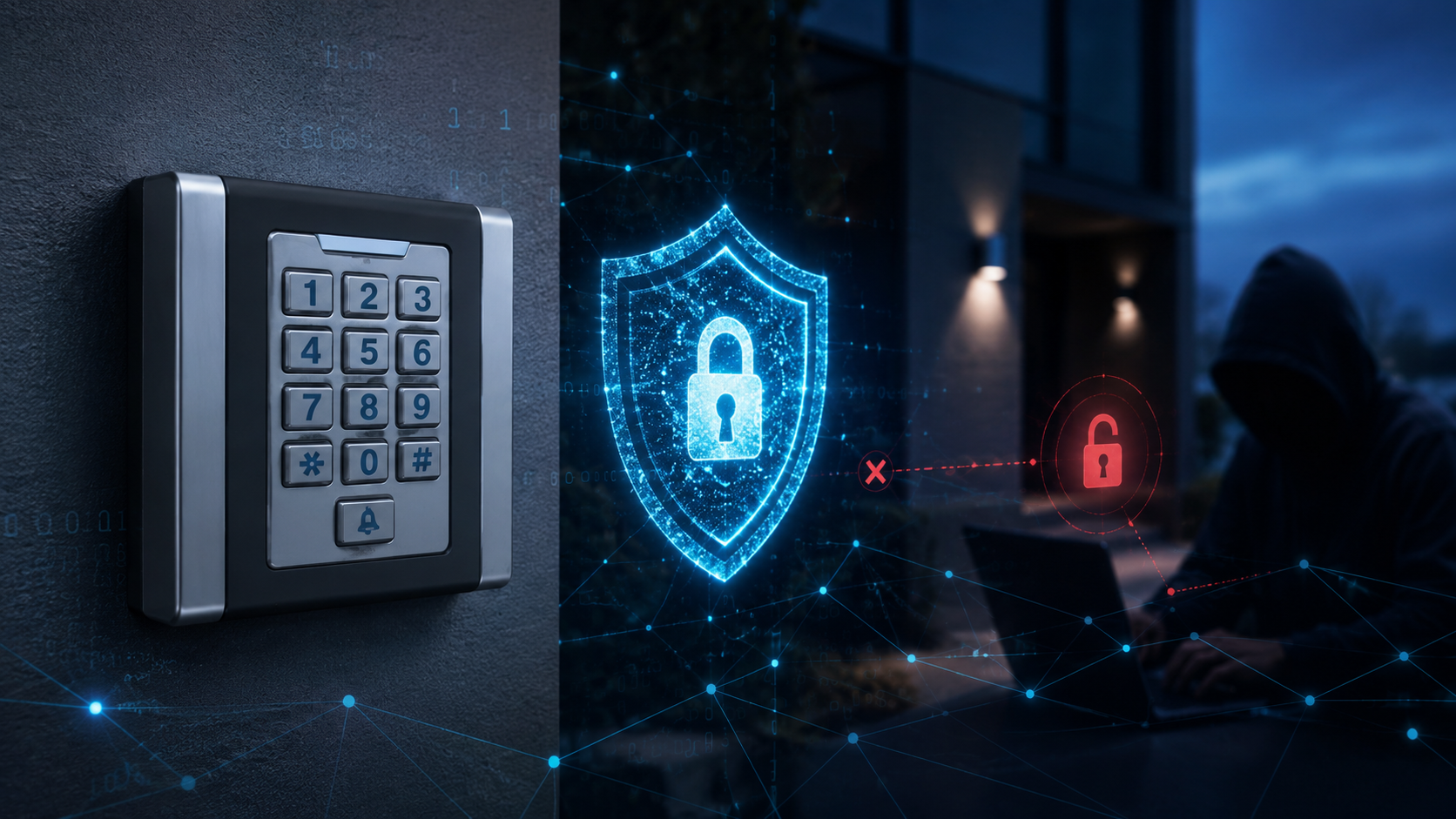
It allows you to manage entry and exit points, tailor access based on user profiles, and organize the day-to-day operations of a site. For example, a wireless keypad like the RADIOKEYD+ allows you to manage multiple access points with different user codes, while avoiding complex installations thanks to wireless technology. This type of equipment offers flexibility and rapid deployment. Product: https://www.prastel.com/produit/radiokeyd-2.
Toward Comprehensive Access Control Systems
The most significant development is the transition from a standalone device to a complete system. A control panel such as the M2000-BT, when paired with an EASYBKW keypad or an LPROX proximity reader, enables the creation of a fully-fledged access control system.
We are no longer talking simply about a single access point, but rather a cohesive system capable of managing users, access rights, and the various entry points of a site. This approach allows for centralized management, the ability to tailor access based on user profiles, and the flexibility to easily scale the system over time.
A solution to on-site challenges
Today, administrators must manage multiple access points, a diverse user base, and environments that can sometimes be complex. They must be able to quickly adjust access rights while minimizing the need for technical intervention.
In this context, radio technology plays a key role. It allows for the installation of access points without major construction work, makes it easy to adapt an existing system, and enables the interconnection of various devices.
Prastel’s line of radio products perfectly illustrates this trend. It includes receivers, transmitters, and remote control solutions that allow you to organize access points while maintaining a high degree of flexibility. Explore the product line: https://www.prastel.com/notre-gamme/radio.
Centralization and simplification of management
Another major change lies in the centralization of access management. Access control is becoming a central hub connecting equipment and users. Rather than deploying multiple systems, administrators are seeking to consolidate access management within a single architecture.
This helps standardize procedures, reduce errors, and provide better visibility across the entire site. This centralization simplifies day-to-day management and improves the reliability of the facilities.
A tool for daily optimization
Beyond security, access control is becoming a tool for optimization. It saves time by simplifying access management, reduces the need for technical interventions, and helps organize traffic flow.
It also enhances the user experience by making access smoother and more intuitive. In practice, these benefits are immediate: less wasted time, fewer errors, and more professional management.
A trend driven by technology
This transformation is made possible by technological advancements, particularly in the areas of secure radio communication, equipment modularity, and ease of integration. Today, it is possible to install an access control system on an existing gate, an industrial door, or a condominium complex without having to overhaul the entire infrastructure.
This adaptability explains the growing adoption of these solutions.
Toward a strategic tool
Access control will soon be more than just a security tool. It will become a means of managing foot traffic, organizing access, and improving the overall efficiency of facilities.
Because it directly affects the actual use of buildings and their day-to-day operations, it becomes a central component of management.
Conclusion: A trend that is already underway
Access control hasn't changed its purpose, but it has evolved. It is no longer limited to providing security. It now helps organize, simplify, and optimize.
In this evolving landscape, Prastel’s solutions provide concrete answers to real-world needs, offering reliable, scalable equipment built to last.
Access control is no longer just about entry points. It has become a valuable tool for managing day-to-day operations.
Prastel latest news
Discover the latest blog posts on automation and safety.

DISCOVER OUR LATEST CATALOG
